The Barque of Dante (Dante and Virgil in the Underworld)
Louvre, Paris, France
Eugène Delacroix, 1822
You know, what really sticks with me about Delacroix’s "The Barque of Dante" isn't just the fiery depiction of Hell, but the sheer physical toll it took on the artist. He apparently worked non-stop for two and a half months to complete it for the 1822 Paris Salon, emerging depleted and weak. Thinking about that intense personal exertion to create a scene from Dante Alighieri's Inferno—a journey through Hell guided by Virgil, where souls are tormented for rejecting spiritual values—adds another layer of meaning. It’s an allegory for the recognition and rejection of sin, and the critics couldn't decide if the canvas was "drab" or if he was already a "distinguished colorist." How could such an intensely personal and physically demanding creation elicit such a polarized response? The French state saw potential, purchasing this oil on canvas for 2,000 francs. It eventually found its way to the Louvre, a long journey for a work depicting one of the most harrowing literary voyages. It makes you wonder what inner demons Delacroix was grappling with as he poured so much of himself into portraying such a realm of torment.
No thoughts yet. Be the first to share one.
TagsRomanticismoilcanvasliterary painting
3.50 (1 rating)
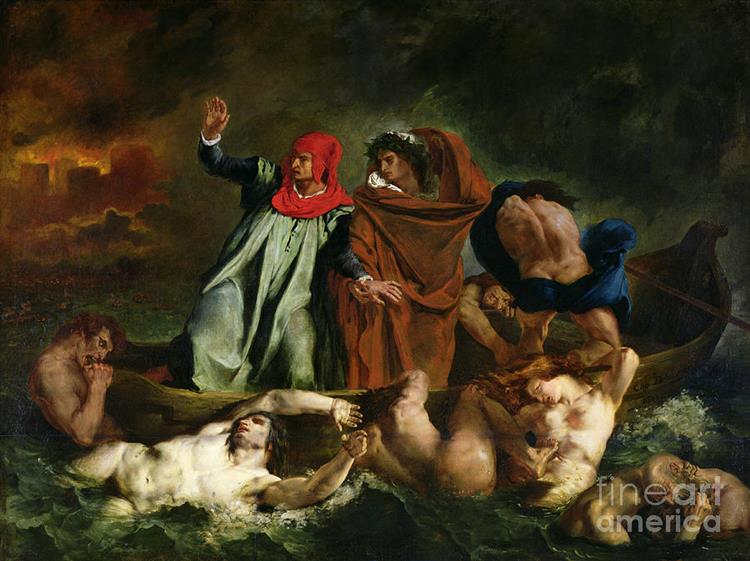
oil, canvas · 1822
Medium
oil, canvas
Period
Romanticism
Held at
Louvre, Paris, France
.jpg!Large.jpg)
.jpg!Large.jpg)
.jpg!Large.jpg)