Self-portrait as the Apostle Paul
Rijksmuseum, Amsterdam, Netherlands
Rembrandt, 1661
Consider the weight of identity inherent in this 1661 artwork: an artist choosing to present himself as the Apostle Paul. Executed in oil on canvas, the medium itself lends itself to rich textures and profound depth, allowing for the nuanced rendering of a chosen persona. This piece sits firmly within the Baroque movement, a period known for its dramatic intensity and emotional resonance, which is only amplified by the specific stylistic approach of Tenebrism. Imagine the intense interplay of light and shadow, a hallmark of Tenebrism, sculpting the artist's features with stark clarity against deep, enveloping darkness. Such a technique would not merely illuminate; it would carve out the psychological landscape of the figure, perhaps emphasizing Paul's solemnity or intellectual intensity through dramatic contrasts. The audacious act of portraying oneself as such a pivotal religious figure suggests a powerful, personal engagement, transforming the canvas into a space where the artist’s own interiority intersects with a revered historical narrative. This choice creates a lingering question about the boundaries between the self, belief, and artistic expression, even as the canvas itself absorbs these layered identities.
No thoughts yet. Be the first to share one.
TagsBaroqueTenebrismoilcanvasself-portrait
3.00 (1 rating)
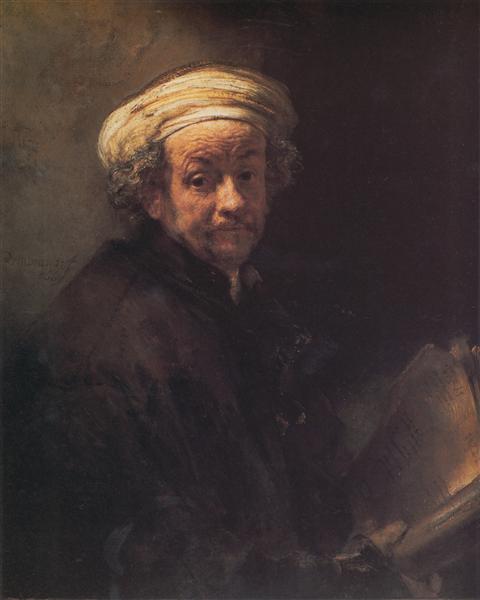
oil, canvas · 1661
Medium
oil, canvas
Period
Baroque · Tenebrism
Held at
Rijksmuseum, Amsterdam, Netherlands