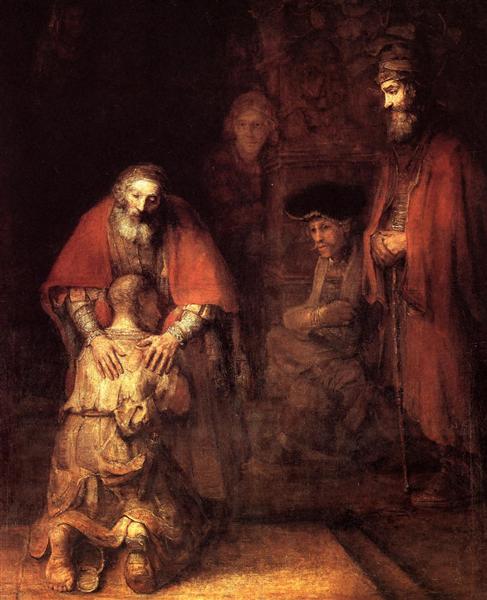
Le Retour du fils prodigue
Hermitage Museum, Saint Petersburg, Russia
Rembrandt, 1669
This poignant artwork, completed in 1669, is an oil painting by the celebrated artist Rembrandt. It is a powerful example from the Baroque movement, an artistic era renowned for its grandeur, dramatic flair, and profound emotional depth. This period often saw artists using bold compositions and intense narratives to engage viewers on a deeply personal level. Furthermore, the piece embodies Tenebrism, a distinct style characterized by extreme contrasts between light and darkness, often featuring dark backgrounds that allow subjects to emerge vividly. Rembrandt was a master of this technique, employing it to create stunning visual drama and highlight key elements within his compositions, drawing the eye precisely where the artist intended. The choice of oil as a medium would have allowed for rich, nuanced colors and a powerful sense of texture and luminosity, contributing to the artwork's overall emotional resonance. While specific historical accounts or critical interpretations directly related to this particular work are not available from the provided sources, its context within Rembrandt's output and the influential movements of Baroque and Tenebrism suggests a piece of significant artistic and emotional impact, reflecting a period of profound artistic storytelling and technical brilliance.
No thoughts yet. Be the first to share one.
TagsBaroqueTenebrismoilreligious painting
3.50 (2 ratings)
oil · 1669
Medium
oil
Period
Baroque · Tenebrism
Held at
Hermitage Museum, Saint Petersburg, Russia