Rouen
Parkes Bonington Richard, 1825
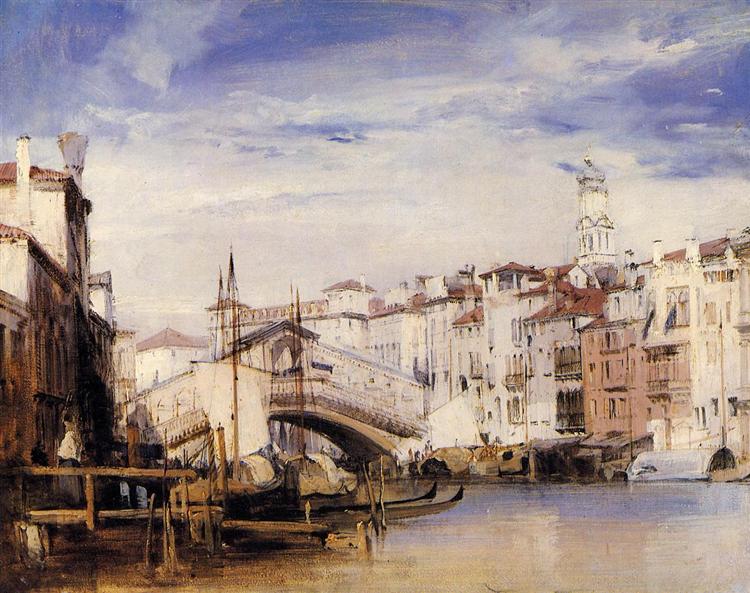
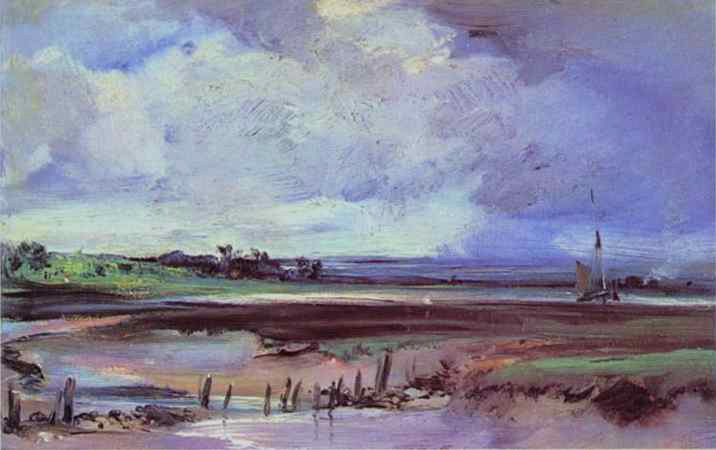
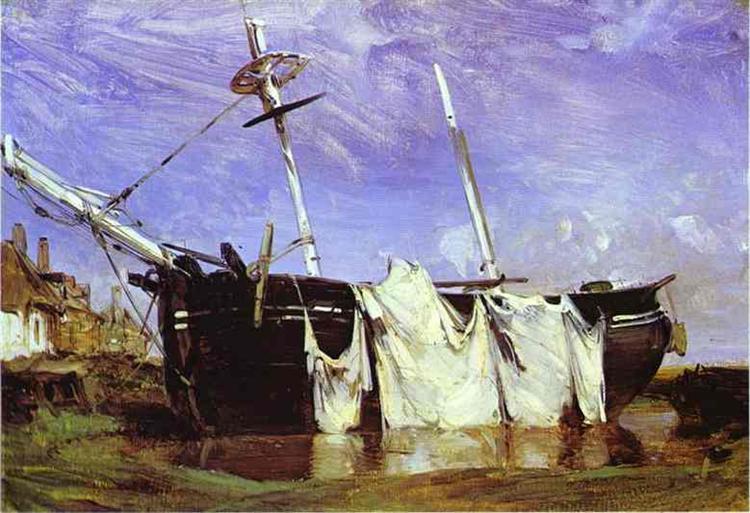
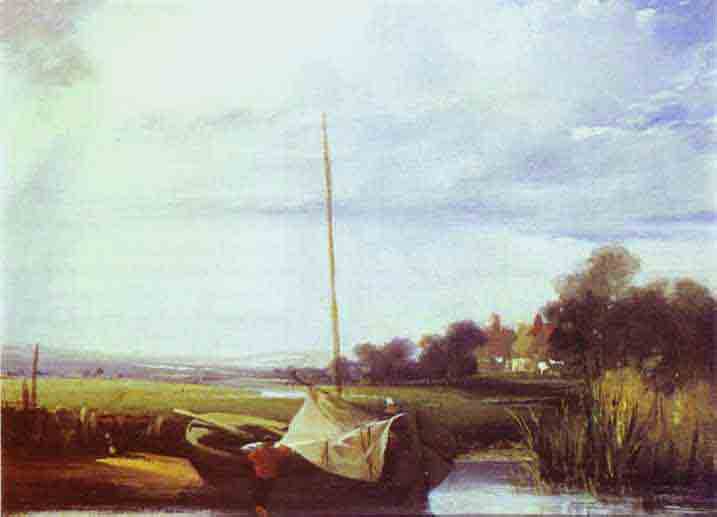
The way light and atmosphere could be handled by Richard Parkes Bonington always fascinates me, especially imagining it in watercolor. As an English Romantic landscape painter who spent significant time in France from age fourteen, Bonington uniquely bridged artistic sensibilities, becoming a truly influential figure. His customary approach to landscapes often featured a low horizon beneath a remarkably large sky, a composition that allowed him to explore light and atmospheric effects with exceptional skill. For a work like "Rouen," rendered in watercolor on paper, this suggests a delicate interplay of washes and controlled saturation to evoke the dramatic skyscapes and subtle nuances of light falling over the scene. The medium itself, watercolor, demands a fluidity and precision that could lend itself to capturing fleeting moments of weather or the soft glow of a distant vista. It makes you wonder about the specific challenges and triumphs involved in achieving his renowned brilliance in light handling, not with the robustness of oil, but with the inherent transparency and immediacy of paper and pigment. How does such an ephemeral medium hold its power when tasked with depicting the grand Romantic landscapes he was known for?
No thoughts yet. Be the first to share one.
TagsRomanticismwatercolorpapercityscape
5.00 (1 rating)
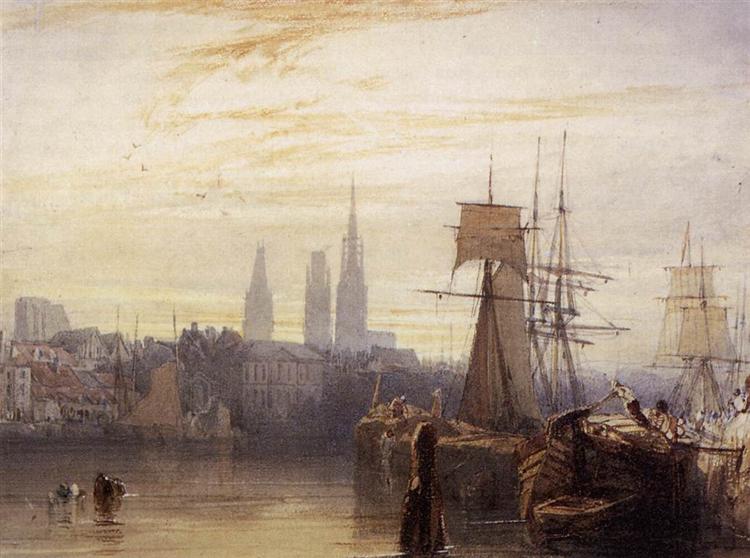
watercolor, paper · 1825
Medium
watercolor, paper
Period
Romanticism