Portrait of Andy Warhol
Jean-Michel Basquiat, 1982
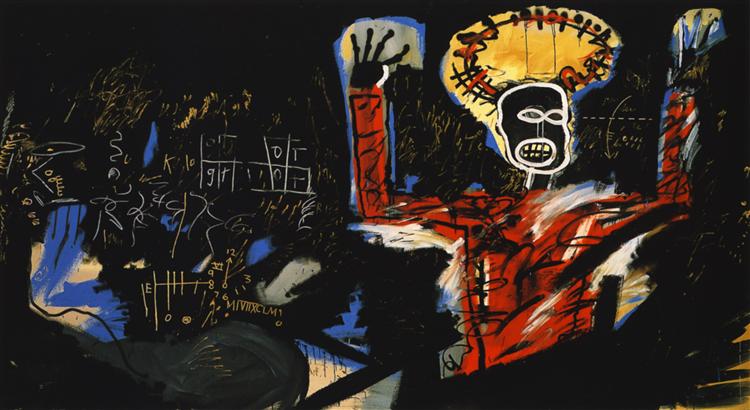
Envisioning Jean-Michel Basquiat's interpretation of Andy Warhol from 1982 is a compelling thought. This artwork, simply titled "Portrait of Andy Warhol," was rendered in oil and positioned within the Neo-Dada movement. The selection of oil as a medium for this portrait suggests a deliberate artistic choice, capable of imparting rich layers, depth, and luminosity to the subject. Without specific visual accounts, one can only ponder the qualities Basquiat chose to emphasize in Warhol's features. Did he employ the inherent versatility of oil to create striking textures, or to define the contours of Warhol's iconic image with a particular palette? The artwork’s classification as Neo-Dada hints at a potential subversion of traditional portraiture, inviting speculation about its form and composition. This specific convergence of two titans of 20th-century art, Basquiat painting Warhol in 1982, forms a powerful conceptual core. The precise visual details—the colors, the brushwork, the overall composition—remain unstated, yet the very notion of this artistic dialogue captured on canvas is profoundly intriguing.
No thoughts yet. Be the first to share one.
TagsNeo-Dadaoilabstract
1.75 (2 ratings)

oil · 1982
Medium
oil
Period
Neo-Dada