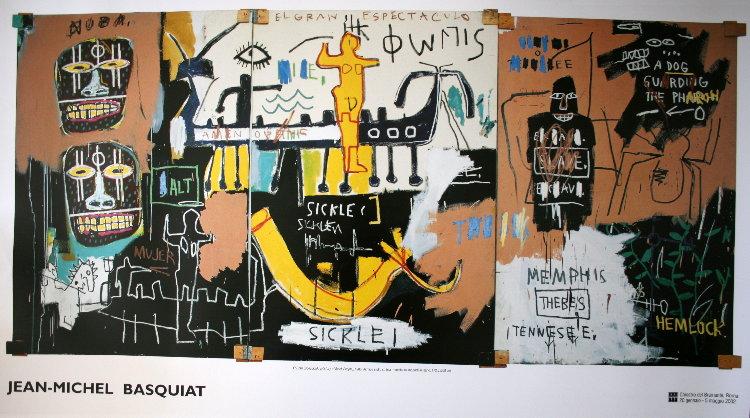
History of the Black People
Jean-Michel Basquiat, 1983
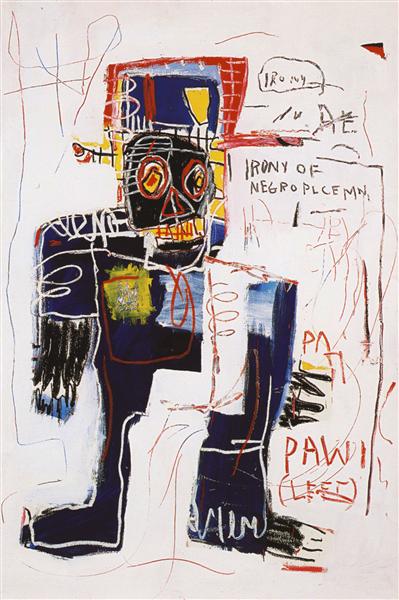
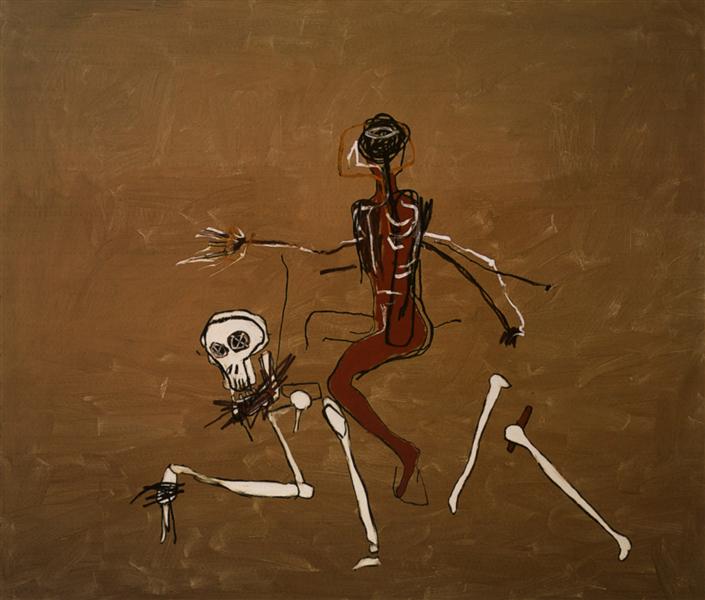
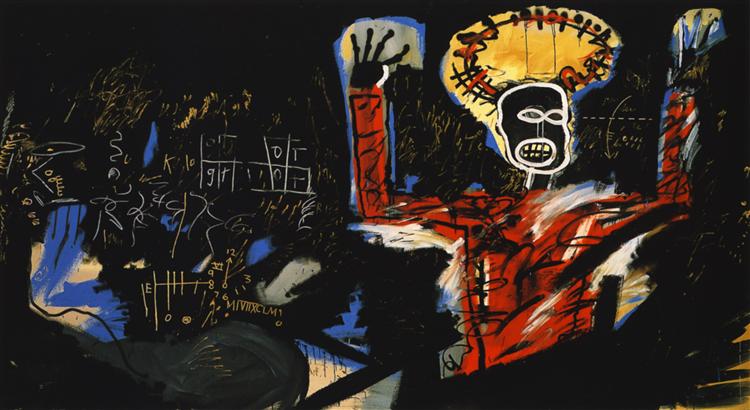
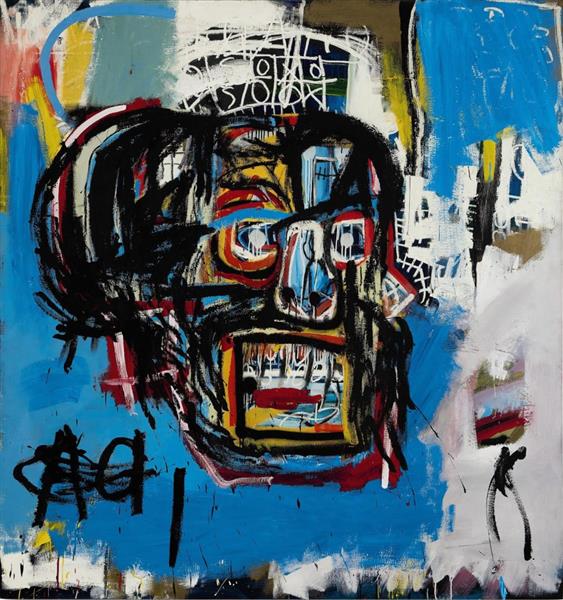
A work titled "History of the Black People," created in 1983 by Jean-Michel Basquiat, carries an immediate weight, its very name sparking significant thought. Given that Basquiat, an American artist, rose to prominence in the 1980s as a defining voice of Neo-expressionism and Street art, one might infer an urgent, perhaps deliberately raw or unpolished, approach to such a monumental subject. These movements are often characterized by their directness and a readiness to tackle profound social narratives head-on, suggesting that this particular piece would have aimed for powerful, visceral communication. What is fascinating, and perhaps even disarming, is that our available records indicate the medium as "unknown." This lack of specific material detail forces a different kind of engagement; rather than describing colors or forms, we are prompted to consider the conceptual force of the title itself and how Basquiat's known artistic leanings would have informed its execution. It leaves us pondering the sheer scale of the historical and cultural narrative compressed into that title, and how an artist known for his potent symbols and script might have visually translated such an immense history, even if its physical attributes currently evade documentation.
No thoughts yet. Be the first to share one.
TagsNeo-ExpressionismStreet artgenre painting
5.00 (1 rating)
1983
Period
Neo-Expressionism · Street art