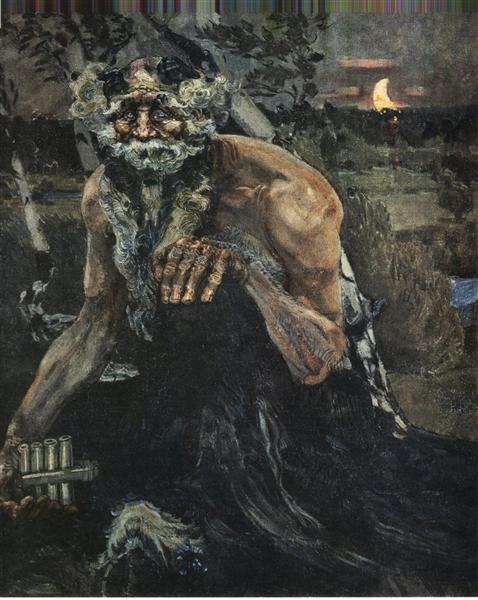
Pan
Tretyakov Gallery, Moscow, Russia
Mikhail Vrubel, 1899
The ancient, untamed spirit of the wild, embodied by a mythological figure, finds new expression on canvas. Mikhail Vrubel, a pivotal figure in the Russian symbolist tradition and a pioneering force in Modernist art, explored such themes with innovation across various media. His 1899 work, titled Pan, rendered in oil on canvas, offers a glimpse into this artistic sensibility. Without specific visual details from the source material, one must consider the movement it belongs to. Symbolism, as Vrubel's primary artistic context, often sought to evoke ideas and emotions rather than depict objective reality. It hinted at deeper meanings through allegory and mystical imagery. Vrubel himself was known for his prolific and innovative approach to painting and drawing. This particular canvas, from 1899, thus emerges from a period where artists like Vrubel were pushing beyond literal representation, aiming for spiritual and psychological resonance. The very choice of Pan as a subject suggests an engagement with primal forces, the untamed aspects of nature and psyche, filtering them through a distinctly modernist lens. The strength of this work, even without knowing its exact visual execution, lies in its positioning within Vrubel's broader pioneering work. What unseen colors or textures on this canvas did Vrubel use to give form to the ancient, mischievous deity, pulling him into the late 19th-century consciousness?
No thoughts yet. Be the first to share one.
TagsSymbolismoilcanvasmythological painting
3.00 (1 rating)
oil, canvas · 1899
Medium
oil, canvas
Period
Symbolism
Held at
Tretyakov Gallery, Moscow, Russia