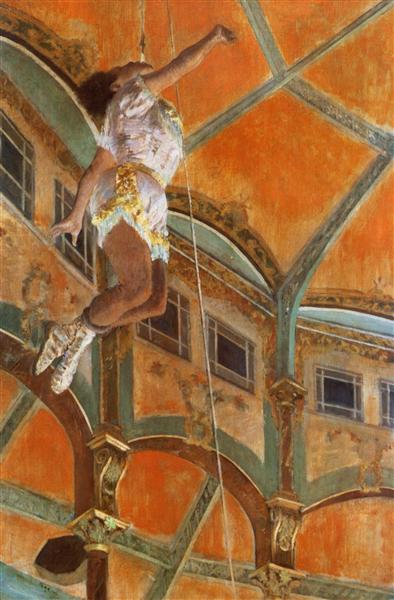
Miss La La at the Cirque Fernando
National Gallery, London, UK
Edgar Degas, 1879
The year 1879 saw the creation of an oil on canvas work by Edgar Degas, "Miss La La at the Cirque Fernando," which holds a singular position in his body of work as his only circus painting. This Impressionist piece was exhibited at the Fourth Impressionist Exhibition in Paris the same year. It depicts Miss La La engaged in her performance within the circus setting. A key aspect of the artwork is Miss La La herself: she is the sole identifiable person of color found in Degas's known works. This unique identity, coupled with Degas's approach to painting her performance, made the piece important and widely appreciated upon its creation. However, it was also controversial. This duality of widespread appreciation and contention makes the artwork particularly thought-provoking. Now part of the National Gallery in London's collection, one can't help but reflect on why this specific performance and Miss La La's distinctive presence generated such strong, conflicting responses in its time. The artwork's unique status, both celebrated and debated, invites continued reflection on its context and impact.
N
Niharika KhannaSep 2024
I had a chance to see this painting at the National Gallery - they have an exhibit that also shows his process and sketches before he painted this masterpiece. His study of light, the sketches of the building, and the angles he wanted to reproduce - all lead up to this beautiful masterpiece!
TagsImpressionismoilcanvasgenre painting
5.00 (1 rating)
oil, canvas · 1879
Medium
oil, canvas
Period
Impressionism
Held at
National Gallery, London, UK