Max Schmitt in a Single Scull (The Champion Single Sculls)
Metropolitan Museum of Art (Met), New York City, NY, US
Thomas Eakins, 1871
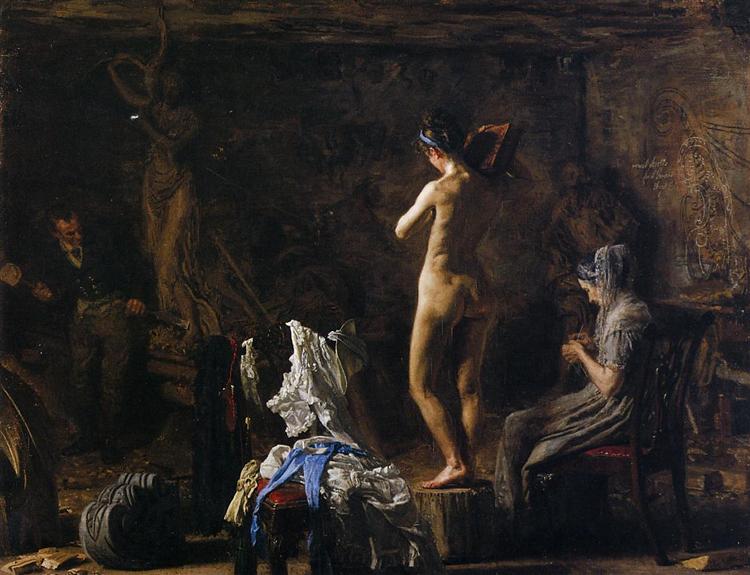
Returning to Philadelphia from Europe in 1870, Eakins began a series of representations of the sport of sculling, a subject for which he is uniquely identified. The Champion Single Sculls is the first significant work in that series of paintings and watercolors. It is believed to commemorate the victory of Max Schmitt, a friend of the artist and skilled amateur rower, in an important race on the Schuylkill River in October 1870. Also an avid rower, Eakins depicted himself pulling the oars of a scull in the middle distance.The theme of rowing plays into Eakins’ own love of sports and his tendency toward masculine themes, as well as the contemporary interest in the moral virtues and health benefits of outdoor recreational activities. In an era in which American printmakers were just beginning to take up the rowing craze and memorialize victorious single scullers as gentlemen and regional heroes, Eakins produced nineteen such rowing images.The Champion Single Sculls debuted to mixed reviews, with one critic noting the “scattered effect” of “dealing so boldly and broadly with the commonplace in nature.” Nevertheless, it marked Eakins’ first major success by demonstrating his remarkable technical skill. It also exhibits the artist’s quirky sense of humor: instead of inscribing his signature in the painting’s corner, Eakins subtly included his name and the date on the boat he is shown rowing in the distance. The Champion Single Sculls is ultimately a snapshot of Eakins, his environment, and his times. Utilizing the Philadelphia-area Schuylkill River as his backdrop (a landmark he would indirectly visit again in his 1877 portrait of William Rush), Eakins is domesticating an exotic genre, that of Orientalist river scenes by artists such as Jean-Léon Gérôme and Frederick Arthur Bridgman.
No thoughts yet. Be the first to share one.
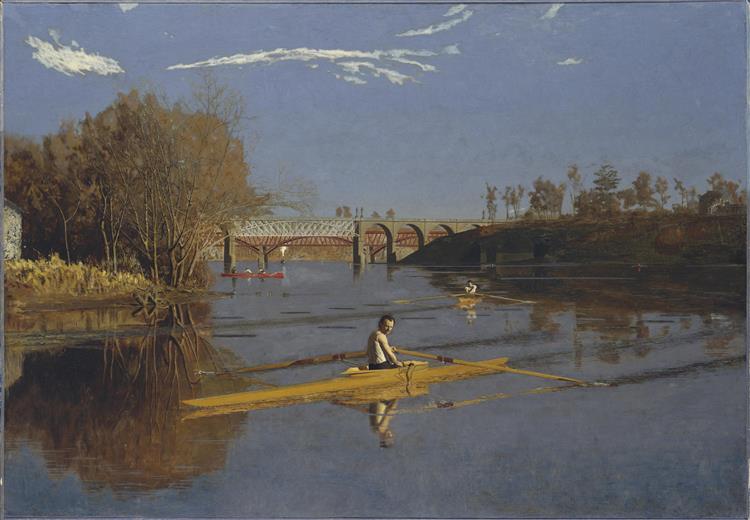
oil, canvas · 1871