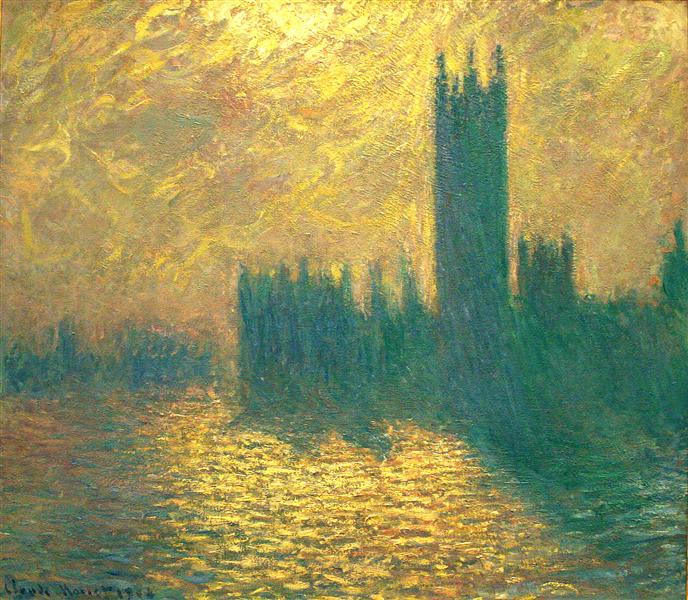
Houses of Parliament
Claude Monet, 1904
The British Parliament building feels like a dream, barely solid through the London mist. This Impressionist work, painted with oil on canvas between 1900 and 1901, captures the structure from a specific vantage point: a terrace at Saint Thomas’s Hospital. It's intriguing to think about Monet, a French artist, drawing inspiration from English and American predecessors. He shared a viewpoint near J. M. W. Turner's famous fire paintings, yet his delicate handling of dusk and atmospheric mist actually echoes James McNeill Whistler’s earlier depictions of the Thames. The way the light struggles to pierce the heavy atmosphere, dissolving sharp edges into soft blurs, is remarkable. You can imagine the specific weather conditions that day, almost feeling the cool, damp air. This is a profound study of light's interaction with substance, where the building itself becomes a vessel for shifting atmospheric effects. The thought that Monet painted an entire series, almost a hundred similar canvases, all from this exact spot but at varying times of day and weather, really emphasizes his dedication to observing light. It makes you wonder how dramatically different each view truly was, and what he sought to reveal through such persistent, focused observation of an enduring landmark through ephemeral conditions.
No thoughts yet. Be the first to share one.
TagsImpressionismcityscape
4.00 (1 rating)
1904
Period
Impressionism

.jpg!Large.jpg)