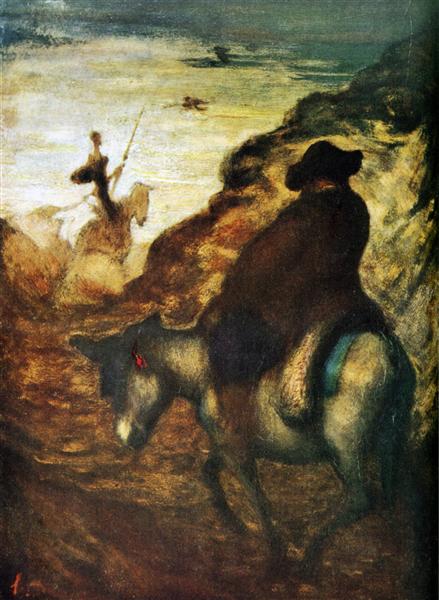
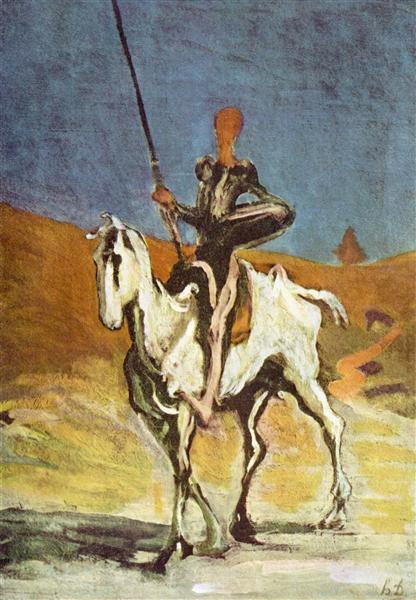
Don Quixote and Sancho Pansa
Neue Pinakothek, Munich, Germany
Honore Daumier, 1870
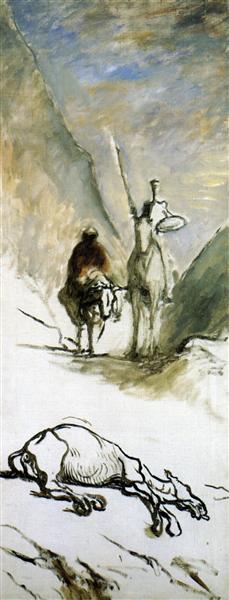
The enduring saga of Don Quixote clearly held a powerful sway over Honoré Daumier, culminating in this 1870 oil on canvas. While specifics of its brushwork or palette are not detailed, knowing it falls under Impressionism suggests a vibrant, perhaps less defined approach to depicting the legendary knight and his squire. Daumier explored the adventures of Don Quixote extensively, creating 49 drawings and 29 paintings on the theme, perhaps finding a kindred spirit in the literary hero and his quixotic struggle. The novel itself, a founding work of Modern Western Literature, offered themes of inventiveness and deception that resonated deeply with the artist known for his satire. Sancho Panza, the loyal squire, would undoubtedly be portrayed with his characteristic earthy wit and broad humor, traits that define him in Cervantes' 1605 novel. His very name, 'Panza,' meaning 'belly' in Spanish, hints at his grounded, corporeal presence contrasting with Quixote's idealism. This artistic return to a beloved subject in oil, late in Daumier’s career, prompts a reflection on what new insight into these iconic figures he might have been pursuing, especially through an Impressionistic lens.
No thoughts yet. Be the first to share one.
TagsImpressionismoilcanvasliterary painting
4.00 (2 ratings)
oil, canvas · 1870
Medium
oil, canvas
Period
Impressionism
Held at
Neue Pinakothek, Munich, Germany