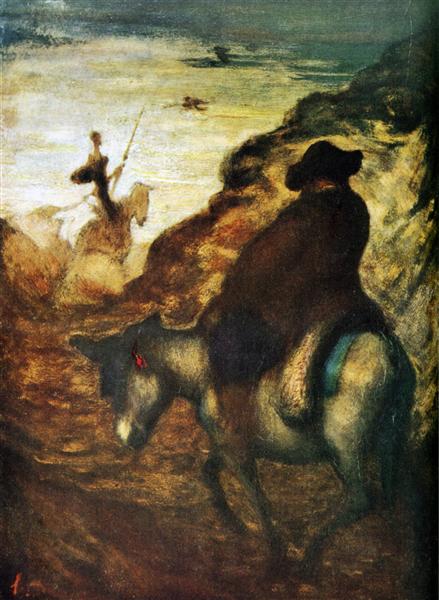
Don Quixote and Sancho Pansa
Honore Daumier, Unknown
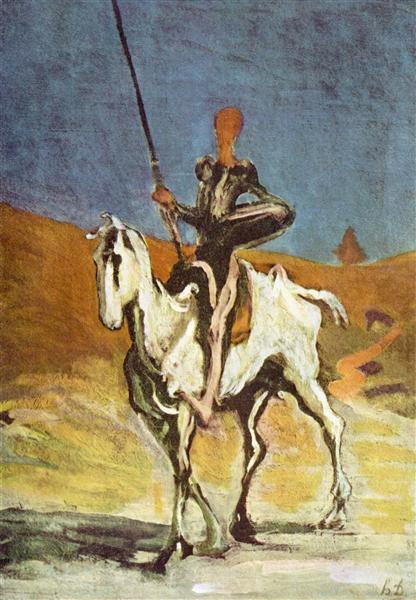
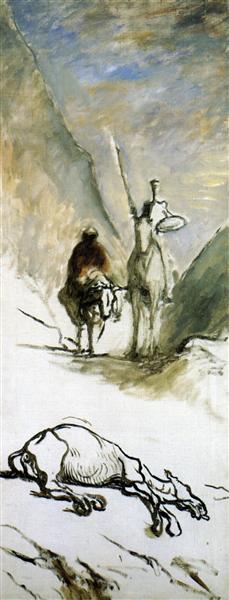
The unique dynamic between Don Quixote and Sancho Pansa, the idealistic knight and his pragmatic squire, is a compelling subject for an oil on canvas. Honore Daumier, as the artist, brings his distinct perspective to these figures, likely exploring their contrasts. While a 19th-century drawing of "Don Quixote and Sancho Panza" by Honoré Daumier exists, rendered in black chalk and gray wash, this particular work's medium of oil on canvas would offer a different visual experience. One can imagine richer textures and broader brushstrokes, allowing for a profound interpretation of their relationship. The name "Panza" itself, meaning "belly" in Spanish, highlights the earthy wit Sancho contributes to their adventures, a constant counterpoint to Quixote's grander visions. Although another oil on panel piece, "Don Quixote and the Windmills," from around 1850 is attributed to an imitator, this oil on canvas, if indeed by Daumier within the Impressionist movement, would present a singular vision. It provokes thought on how the artist chose to express the deep, often humorous, tension between this iconic duo, rendered with the fluidity and depth inherent to oil paint.
No thoughts yet. Be the first to share one.
TagsImpressionismoilcanvasliterary painting
4.00 (1 rating)
oil, canvas
Medium
oil, canvas
Period
Impressionism