Blue poles (Number 11)
National Gallery of Australia (NGA), Canberra, Australia
Jackson Pollock, 1952
The sheer audacity of "Blue poles (Number 11)" must have been startling in 1973, particularly for a conservative art world. Crafted with enamel on canvas, Jackson Pollock's 1952 piece, a hallmark of Action painting, features prominent blue elements that undoubtedly contributed to its controversial reception. The fluidity and layering implied by enamel in Action painting techniques suggest a dynamic surface, where color and gesture assert themselves directly. When it was purchased for an unprecedented $2 million at auction, the acquisition ignited a political and media scandal. This intense public reaction was fueled not only by the price tag but also by the work itself, challenging established notions of what art could be. The National Gallery of Australia’s decision to acquire it certainly provoked strong feelings, making the blue forms within the work a focal point of discussion beyond mere aesthetics. The controversy underscores how art, particularly in the vein of Action painting, can disrupt and provoke, lingering in public consciousness long after its creation.
No thoughts yet. Be the first to share one.
TagsAction paintingenamelcanvasabstract
5.00 (1 rating)
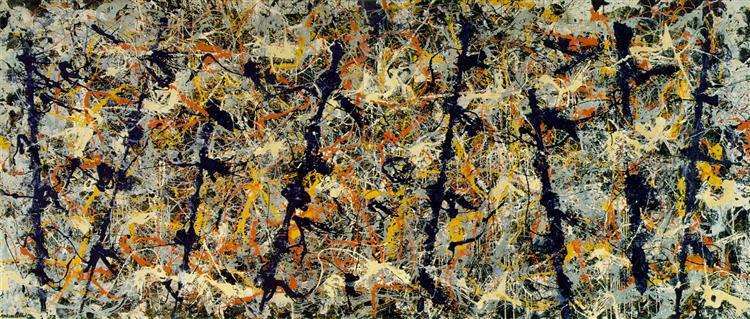
enamel, canvas · 1952
Medium
enamel, canvas
Period
Action painting
Held at
National Gallery of Australia (NGA), Canberra, Australia
.jpg)
.jpg!Large.jpg)