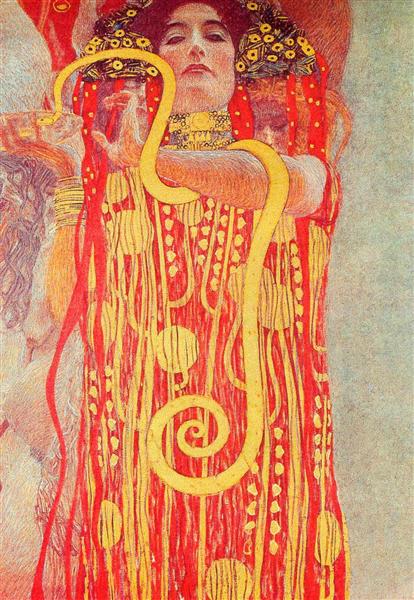
University of Vienna Ceiling Paintings (Medicine), detail showing Hygieia
Destroyed
Gustav Klimt, 1907
This intriguing artwork, a detail showing Hygieia, is part of Gustav Klimt's University of Vienna Ceiling Paintings, specifically from the "Medicine" panel. Created in 1907 with oil on canvas, it belongs to the Art Nouveau movement. Klimt was commissioned in 1894 to adorn the University of Vienna’s great hall with a series of three works: Philosophy, Medicine, and Jurisprudence. "Medicine," the second in this series, aimed to depict the river of life and the continuity of life and death, notably without direct allusions to medical science or healing. This departure from conventional medical themes led to controversy, as critics pointed out its lack of connection to Vienna's significant medical advancements of the time. Upon completion, the university found the works "pornographic in nature" and full of "perverted excess," ultimately refusing to display them. Tragically, these monumental paintings were destroyed in Germany in 1945, with only a photograph of a portion of "Medicine" and various sketches remaining today.
No thoughts yet. Be the first to share one.
TagsArt Nouveau (Modern)oilcanvasallegorical painting
4.50 (2 ratings)
oil, canvas · 1907
Medium
oil, canvas
Period
Art Nouveau (Modern)
Held at
Destroyed