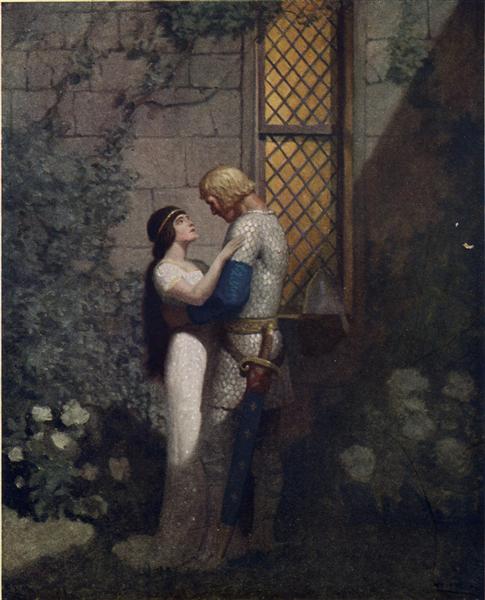
Tristram and Isolde
N.C. Wyeth, Unknown
The very idea of "Tristram and Isolde" rendered in the Realism movement by N.C. Wyeth presents a fascinating conceptual tension. Here is a legendary romance, steeped in myth and dramatic fate, approached by an artistic philosophy typically dedicated to observable reality and the everyday. One imagines Wyeth grappling with the challenge of grounding such a tale, perhaps by focusing on the raw human emotions of love, betrayal, and longing, rather than the more fantastical elements of courtly legend. How does an artist distill the essence of magical potions or destined love into a believable, tangible scene? The work, known only by its title and the broad stroke of its movement, leaves the specific visual choices entirely to conjecture. What details might Wyeth have chosen to emphasize to achieve this realistic portrayal? It forces an appreciation for the interpretive power required to bridge the gap between ancient epic and the demands of depicting life "as it is." The unknown medium and year further shroud this particular interpretation in a compelling ambiguity, prompting a deeper consideration of how an artist like Wyeth might have transformed the mythical into the palpably human.
No thoughts yet. Be the first to share one.
TagsRealismillustration
4.00 (1 rating)
—
Period
Realism