Time of roses
Georg Waldmüller Ferdinand, 1864
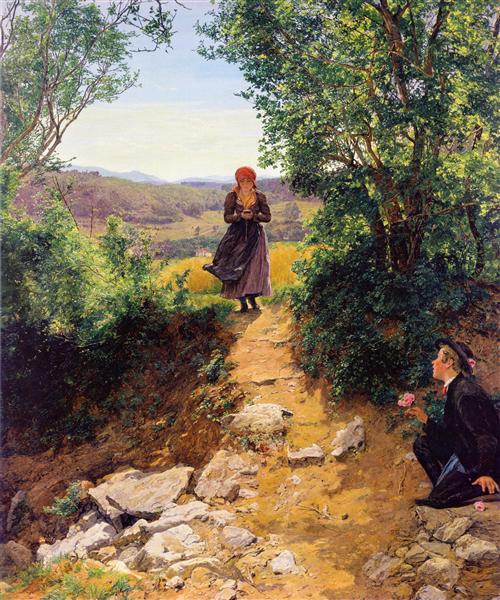
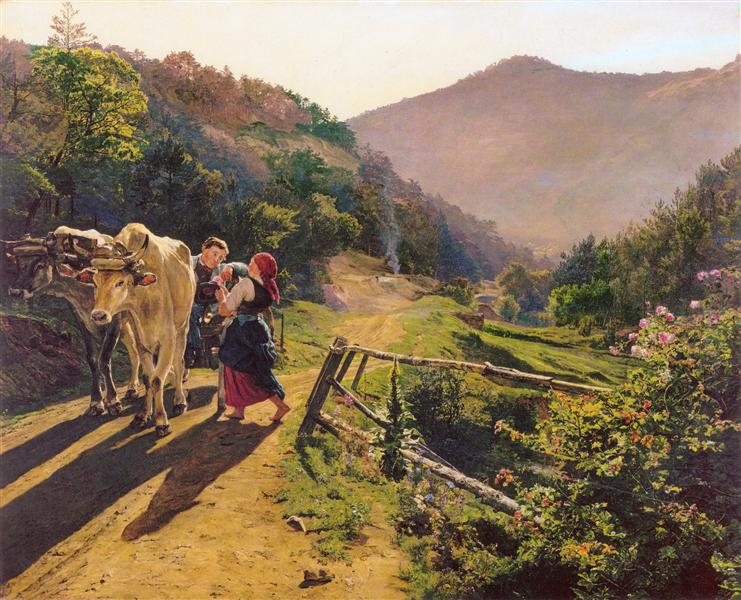
Envisioning "Time of roses" by Georg Waldmüller Ferdinand, completed in 1864, one pictures a scene imbued with a gentle, perhaps wistful, beauty. Executed in oil on canvas, this work likely navigates the emotional landscapes of Romanticism while grounding itself in the intimate world of Biedermeier. The very phrase "Time of roses" suggests a palette rich in soft pinks, deep reds, and verdant greens, painting a canvas probably blooming with detailed floral arrangements or a lush garden setting. One might imagine light falling delicately, perhaps late afternoon sun or a calm morning glow, highlighting the petals' textures and the quiet serenity of the moment. The period's emphasis on naturalistic detail, especially in Biedermeier works, would ensure each rose, each leaf, receives a meticulous, almost reverent attention from the artist. This piece would have served as an invitation to pause, to appreciate the fleeting elegance of nature and the simple, yet profound, pleasures of life. It’s not hard to picture a composition that fosters contemplation, allowing the viewer to linger on the visual poetry of nature’s bloom. The question remains, does it celebrate the zenith of beauty, or does it hint at its inevitable passing?
No thoughts yet. Be the first to share one.
TagsRomanticismBiedermeieroilcanvasgenre painting
4.00 (1 rating)
oil, canvas · 1864
Medium
oil, canvas
Period
Romanticism · Biedermeier