The Nightmare
Detroit Institute of Arts, Detroit, MI, US
Henry Fuseli, 1781
An unsettling concept takes center stage with "The Nightmare," a work from 1781 by Henry Fuseli. This oil on canvas piece aligns with the Romanticism movement, a period deeply invested in exploring intense emotions and the often disquieting territories of the human psyche. The very title suggests a profound journey into the subconscious, hinting at imagery designed to evoke internal dread. While the provided sources offer no specific visual details of this particular canvas, the medium of oil on canvas itself implies a potential for rich textural depth and strong tonal contrasts, characteristic of works from this era seeking to portray dramatic psychological states. Fuseli, an artist known for his engagement with the macabre and the fantastic, would have employed the techniques of his time to manifest such an evocative theme. The compelling nature of its title, "The Nightmare," becomes paramount in the absence of visual documentation, compelling one to imagine the specific, unsettling forms Fuseli chose to present this potent Romantic vision. What visual manifestations of dread might Fuseli have conjured on this canvas, leaving a lasting impression on viewers?
No thoughts yet. Be the first to share one.
TagsRomanticismoilcanvassymbolic painting
5.00 (2 ratings)
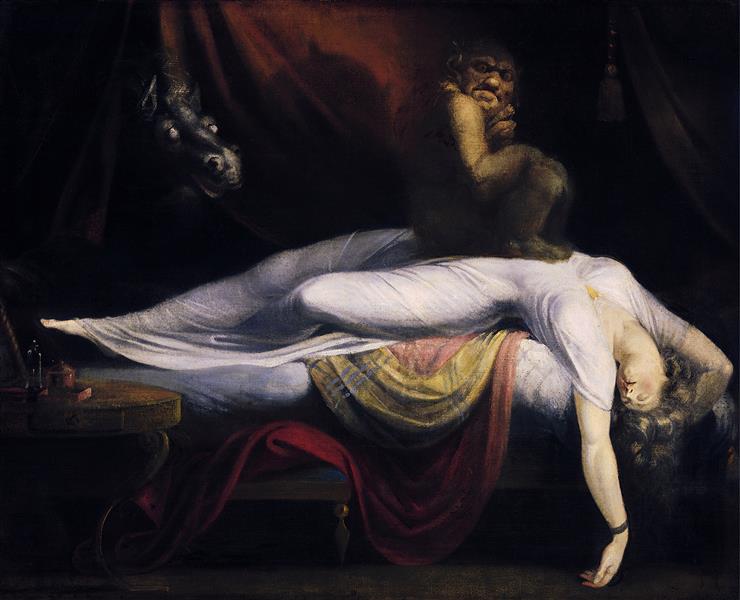
oil, canvas · 1781
Medium
oil, canvas
Period
Romanticism
Held at
Detroit Institute of Arts, Detroit, MI, US
.jpg!Large.jpg)
.jpg!Large.jpg)
.jpg!Large.jpg)
.jpg!Large.jpg)