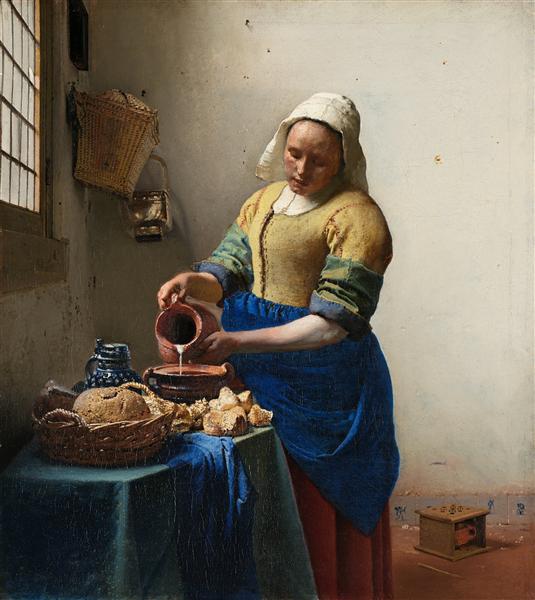
The Milkmaid
Rijksmuseum, Amsterdam, Netherlands
Johannes Vermeer, 1660
This captivating artwork, painted by Johannes Vermeer in 1660, offers a unique perspective on 17th-century Dutch genre painting. While kitchen maids were often depicted, Vermeer chose to make his milkmaid the sole subject of this compelling single-figure portrait. She is deeply engrossed in her task, carefully pouring milk, set within a relatively sparse kitchen environment. X-ray studies reveal that Vermeer deliberately simplified the background, removing a wall hanging and replacing a basket with a footwarmer, to place greater emphasis on her activity. Unlike many contemporary genre scenes that presented narratives or moral warnings, this painting simply captures a quiet moment in time, with a limited space that directs the viewer’s full attention to the milkmaid. Vermeer masterfully uses light and shade, with daylight streaming from a window, to create a strong physical presence and a striking contrast with the rear wall. Her silhouette is further enhanced by a subtle white contour line. This portrayal imbues the milkmaid with empathy and dignity, possibly conveying ideals of virtue and modesty through her diligent work. Even elements like the footwarmer and subtle cupid tiles, while not suggesting central romantic love, symbolize human caring and devotion, contributing to the central theme of nourishment.
No thoughts yet. Be the first to share one.
TagsBaroqueoilcanvasgenre painting
3.92 (6 ratings)
oil, canvas · 1660
Medium
oil, canvas
Period
Baroque
Held at
Rijksmuseum, Amsterdam, Netherlands