The Isle of the Dead
Kunstmuseum Basel, Basel, Switzerland
Arnold Böcklin, 1880
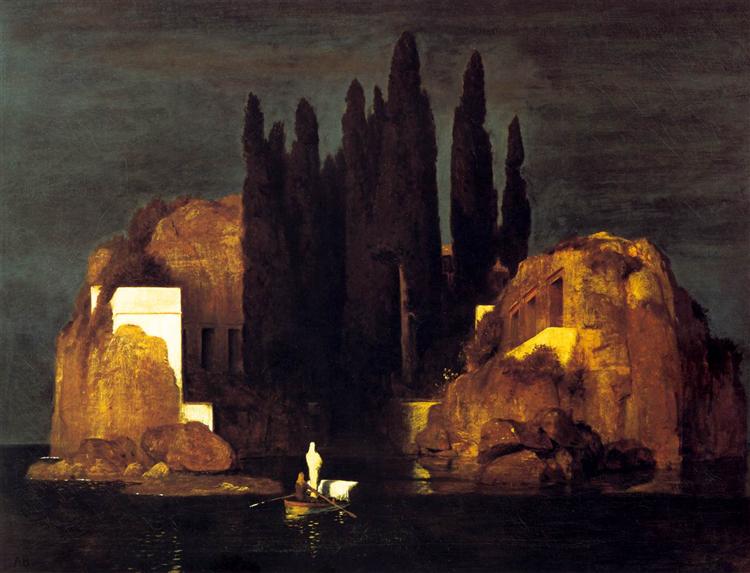
The weight of isolation is palpable in Arnold Böcklin
H1s The Isle of the Dead, a painting from 1880 executed in oil on wood. This particular version, measuring 29 by 48 inches, immediately suggests a scene both intimate in its focus and vast in its implications. The very title, "Isle of the Dead," firmly anchors the work within the Symbolism movement, implying a landscape imbued with profound, existential meaning rather than a literal geographical location. Böcklin created a vision so compelling that it inspired Max Klinger to produce his own etching and aquatint of the subject in 1890, merely a decade after this work. This remarkable act of artistic interpretation speaks volumes about the powerful, lingering resonance of Böcklin's original concept. The painting's distinctive dimensions, wider than tall, inherently contribute to a contemplative view, perhaps of a journey's end or a final, remote destination. Its medium, oil on wood, would inherently lend a specific, perhaps somber, texture and depth to this mysterious, symbolic vista, urging us to ponder what secrets such an island might hold, existing as it does at the edge of human comprehension.
No thoughts yet. Be the first to share one.
TagsSymbolismoilcanvasallegorical painting
4.50 (1 rating)
oil, canvas · 1880
Medium
oil, canvas
Period
Symbolism
Held at
Kunstmuseum Basel, Basel, Switzerland