The Death of General Wolfe
National Gallery of Canada, Ottawa, Canada
Benjamin West, 1770
In The Death of General Wolfe, West depicts the pivotal Battle of the Plains of Abraham, also known as the Battle of Quebec, which occurred on September 13, 1759, during the French and Indian War. The General lies dying, surrounded by two groups of soldiers and the Union Jack flag, evoking a Christ-like image at the center of the composition. The formal arrangement is reminiscent of traditional religious scenes like The Lamentation or The Descent from the Cross. Instead of apostles, high-ranking friends of Wolfe, one of whom unrealistically wipes the General's bloodless chest with a white cloth, are present in the foreground. Although designated as a history painting, only one of the identifiable men - flag bearer Lieutenant Brown - was actually present at Wolfe's death. A Native American warrior in traditional dress kneels in the foreground, embodying both Romantic ideals of the "noble savage" and reminding English viewers of Native American and colonial aid during the war.The muted, less-defined background provides theatrical depth while focusing the viewer's attention on the scene. The British fleet on the St. Lawrence River is visible in the distance, and smoke from gunfire creates a dramatic cloudscape. As the smoke clears on the left, a cathedral spire and blue sky appear, symbolizing hope.The work is considered a "blockbuster" due to its narrative abundance and a "breakthrough" in formal innovations. At the time, history paintings did not depict current events, and heroes did not wear contemporary dress. West went against professional advice from Joshua Reynolds, arguing that the same truth that guides the historian should govern the artist's pencil. Despite his rebellion, the piece was successful with the public, and William Woollett's engraving found a broad commercial audience. West painted five more versions, one of which King George III hung in his private collection. The Death of General Wolfe revolutionized history painting and influenced painters such as John Trumbull and John Singleton Copley. According to art historian Loyd Grossman, it is one of the first great modern pieces if modernity is understood as the will to "heroize" the present, in Michel Foucault's words.
No thoughts yet. Be the first to share one.
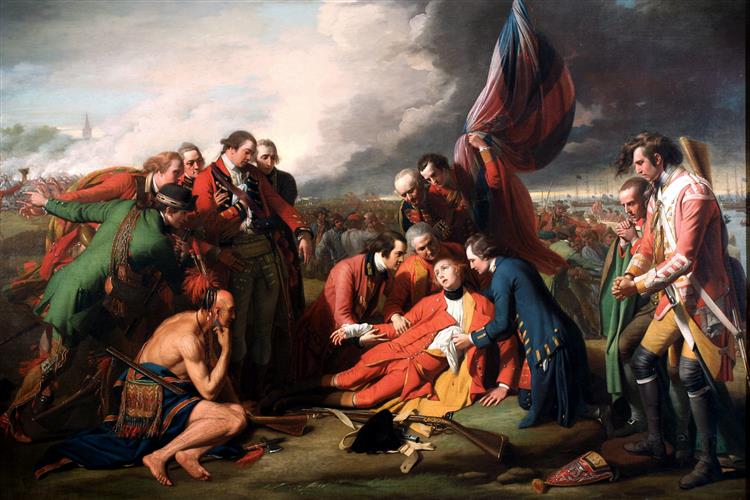
oil, canvas · 1770
More by Benjamin West
View all works →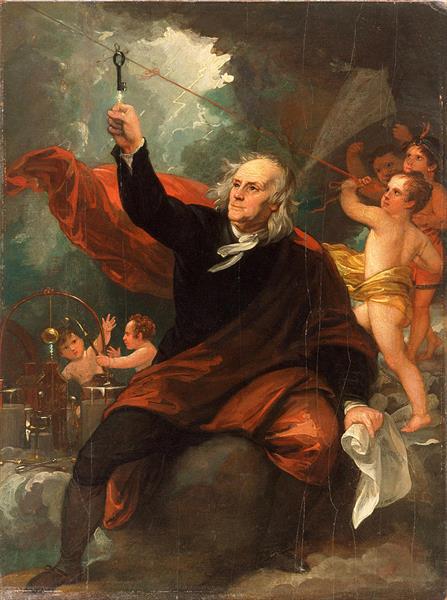
Neoclassicism
Benjamin Franklin Drawing Electricity from the Sky
1816
Rococo
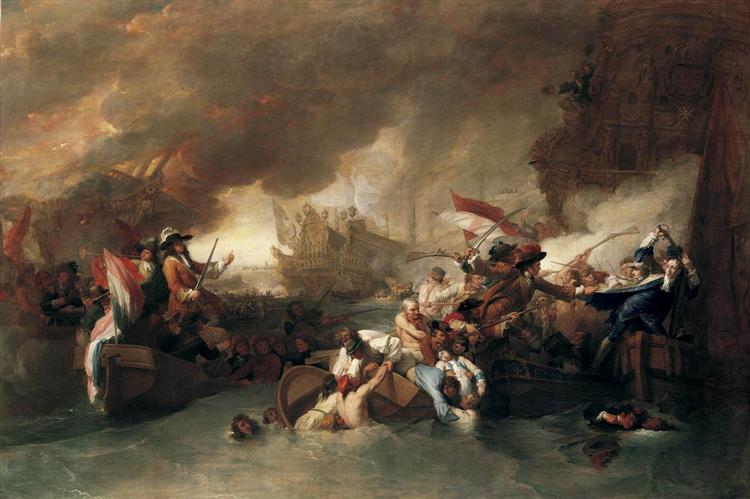
The Battle of La Hogue, Destruction of the French fleet, May 22, 1692
1778
Rococo
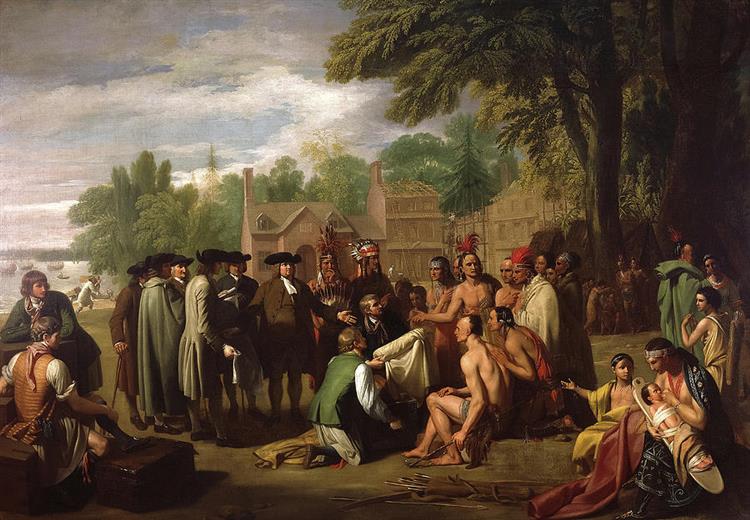
The Treaty of William Penn with the Indians
1772
Rococo
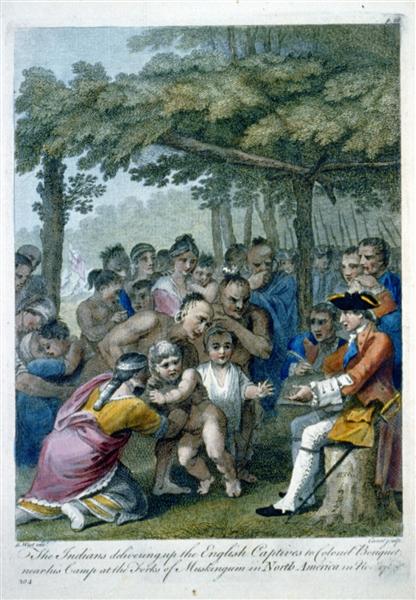
The Indians Delivering up the English Captives to Colonel Bouquet near his camp at the folks of Muskingum, North America in November 1764
1769