Breton Women at the Well near Batz
Camille Corot, 1844
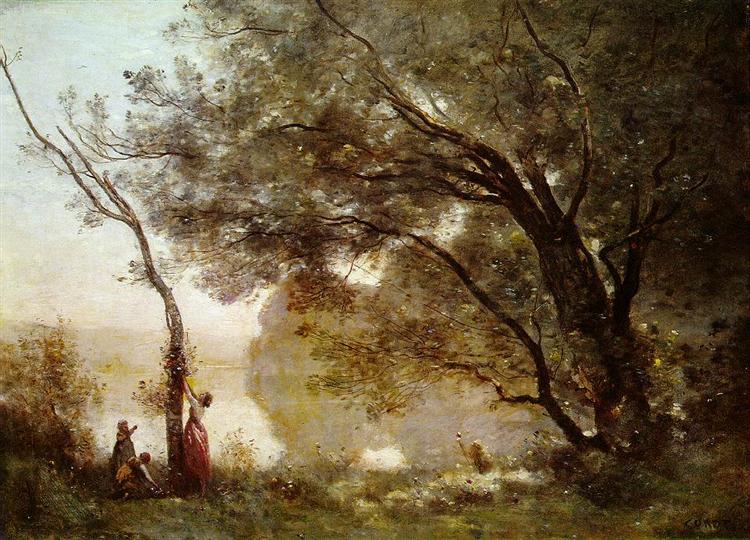
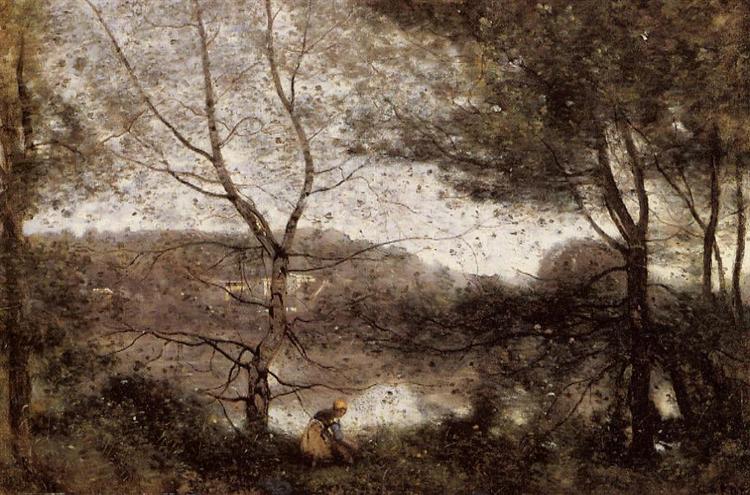
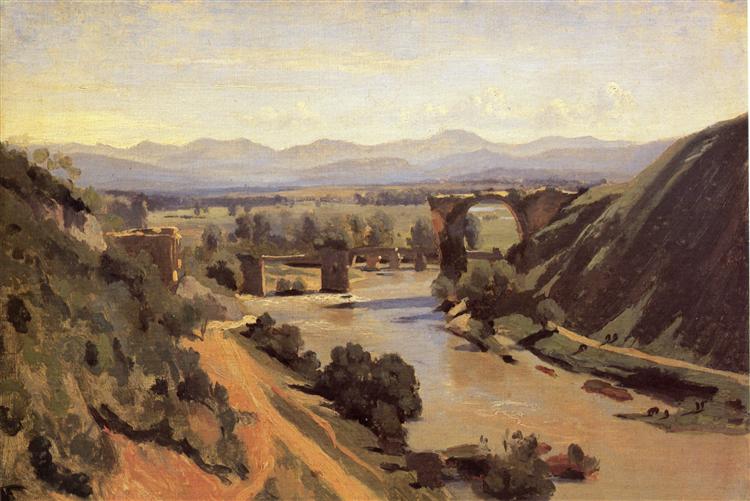
The way light plays across the scene in "Breton Women at the Well near Batz" must be deeply compelling, considering Camille Corot's famed artistic journey. He once wrestled with the intense yellow hues of bright Italian sunlight, a challenge that led him to develop a distinct color palette. This involved a sophisticated use of monochromatic schemes, where shades are varied into beautiful complimentary tones, a technique he would apply to his subsequent works on oil and paper. Such an approach would have been crucial for rendering the distinctive atmosphere of Brittany, a historic region in northwestern France, home to the culturally unique Breton people. It's intriguing to think that this specific subject
figures in a landscape
was also explored by his teacher, Achille-Etna Michallon, and his friend Ernst Fries. Corot, in his rendering of these women at the well, likely imbued the scene with his characteristic light, allowing subtle shifts in tone to convey the local environment rather than just vivid, direct color, prompting a quiet reflection on the region's enduring identity.
No thoughts yet. Be the first to share one.
TagsRealismoilpaperlandscape
5.00 (1 rating)
oil, paper · 1844
Medium
oil, paper
Period
Realism