The School of Athens
Vatican Museums, Vatican
Raphael, 1511
The grand fresco, known as "The School of Athens," is one of Raphael’s most celebrated works, completed in 1511 during the High Renaissance. This impressive artwork was commissioned by the Pope to adorn the Stanza della Segnatura, the first set of rooms to be decorated within the Vatican. It holds a significant place as the second piece in the series gracing these walls. What makes the fresco particularly fascinating is its departure from traditional religious themes for a papal commission. Instead, nearly every figure depicted can be identified as a Greek philosopher. Raphael even famously included the likeness of Michelangelo within the scene, portraying him as the philosopher Heraclitus. The presence of specific figures, such as Diogenes, was so compelling that the work inspired later artists, with studies focusing on individual characters. This masterpiece invites viewers to explore a vibrant assembly of great thinkers, offering a rich narrative without relying on sacred imagery.
No thoughts yet. Be the first to share one.
TagsHigh Renaissancefrescohistory painting
4.20 (20 ratings)
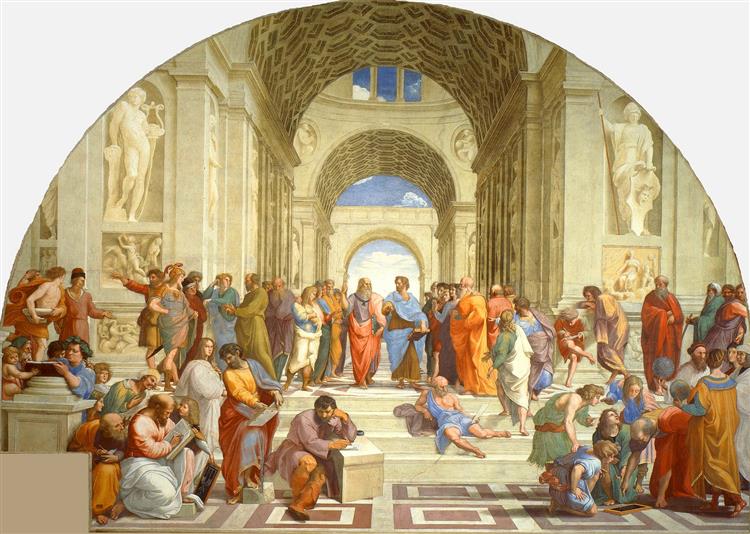
fresco · 1511
Medium
fresco
Period
High Renaissance
Held at
Vatican Museums, Vatican