Quiet cloister
Tretyakov Gallery, Moscow, Russia
Isaac Levitan, 1890
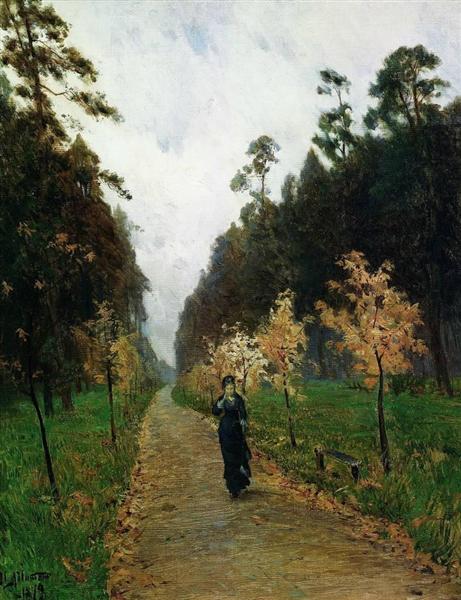
A work titled "Quiet cloister" by Isaac Levitan, from 1890, naturally evokes a sense of hushed sanctuary. Given its designation as Realism, one can infer an attentive study of a specific architectural space, likely a monastery courtyard or a covered walkway. The use of oil on canvas would have facilitated a nuanced approach to depicting surfaces: perhaps the rough texture of stone columns, the smooth worn path underfoot, or the intricate play of light and shadow across vaulted ceilings. Such a piece would aim for a faithful representation, where the muted palette and deliberate composition emphasize the profound stillness inherent in the title. Imagine sunlight, possibly filtered or diffused, creating soft gradients that define the contours of the structure, or highlighting a solitary detail that draws the eye into the depth of the scene. The atmosphere would be one of profound tranquility, where every element contributes to a sense of enclosed peace. It's an approach that values careful observation, allowing the simple truth of the scene to resonate, rather than relying on dramatic embellishment.
No thoughts yet. Be the first to share one.
TagsRealismoilcanvaslandscape
4.50 (1 rating)
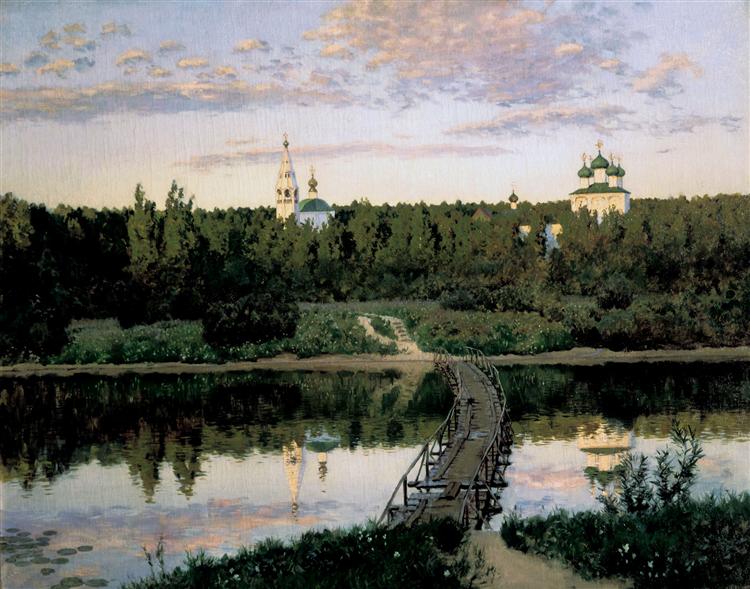
oil, canvas · 1890
Medium
oil, canvas
Period
Realism
Held at
Tretyakov Gallery, Moscow, Russia