Memorial for Karl Liebknecht
Kathe Kollwitz, 1919
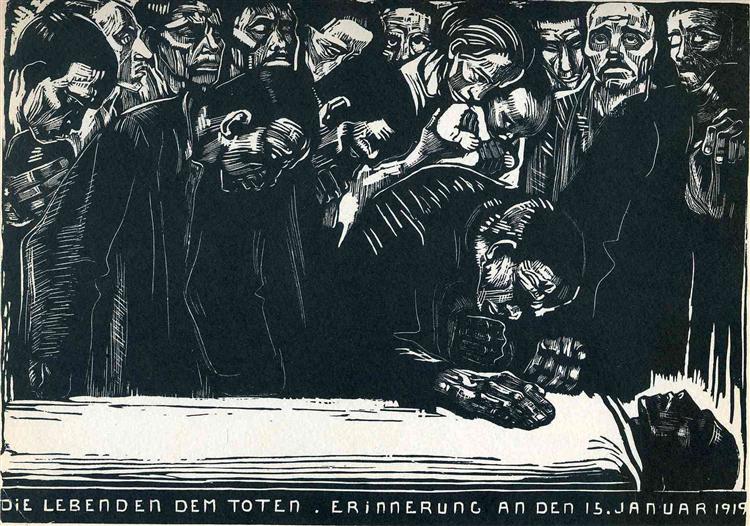
The weight of grief and ideological conviction presses down in this stark woodcut, where Karl Liebknecht's body lies like a stiff, stone horizontal slab at the bottom center, anchoring the composition. Käthe Kollwitz created this print in 1920, her first woodcut, honoring Liebknecht and Rosa Luxembourg, executed for their role in the 1919 Spartacist uprising. Made with brush and black ink on cream Japanese paper, the image is dominated by mournersmostly male workers of varying ageswho form a deeply bowed, curved arc towards Liebknecht, their heads and torsos bent in respect. The composition contrasts Liebknecht's rigid horizontality with these tilting arcs of sorrow. A woman and child in the foreground are placed as symbolic representatives of future generations meant to benefit from Liebknecht's ideology. A man's overemphasized hand rests prominently on Liebknecht's chest, underscoring the physicality of the ideological struggle. Interestingly, despite Kollwitz's commitment to radical politics and her intention for this work to be a tribute, some members of the German Communist Party objected to it because she was not an official party member. This detail reveals a tension between deeply held personal conviction and institutional approval, even in shared political spaces.
No thoughts yet. Be the first to share one.
TagsExpressionismgenre painting
5.00 (1 rating)
1919
Period
Expressionism