Movement in Squares
Bridget Riley, 1961
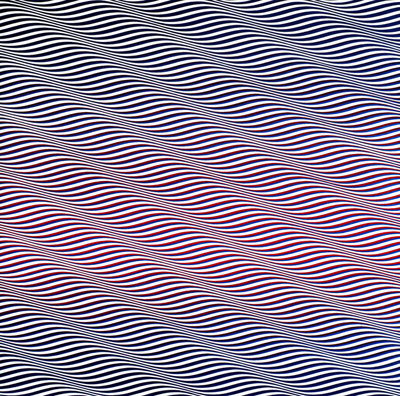
The optical sensation created by "Movement in Squares" by Bridget Riley is startling. This 1961 Op Art piece, despite its unknown medium, compels the eye to search for stability in a field of geometric forms that refuse to remain still. Riley manipulates the arrangement of squares to suggest a subtle, unsettling vibration or flow. It
D5an active visual experience, where the static elements appear to pulsate or shift, constantly challenging the viewer's perception. The work isn't just seen; it's felt, as the eye attempts to reconcile the fixed reality of the composition with the perceived kinetic energy. This engagement makes the viewer acutely aware of their own visual processes, turning the act of looking into an almost physical sensation. How does a precisely rendered pattern achieve such a disorienting, yet captivating, effect? The brilliance lies in how Riley makes the mind fill in the motion, transforming inert shapes into a dynamic field. It lingers, questioning the very nature of visual truth.
No thoughts yet. Be the first to share one.
TagsOp Artabstract
5.00 (1 rating)

1961
Period
Op Art