Laugh Now
Banksy, 2002
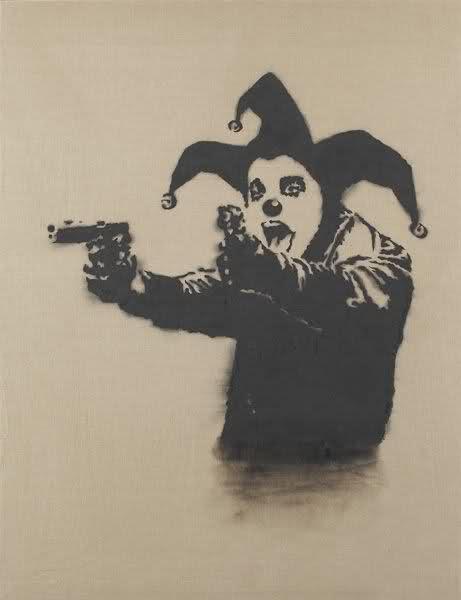
The 2002 work by Banksy, titled "Laugh Now," operating within the Street art movement, evokes a sense of provocative irony, even without specific visual details from the available sources. The very title, a stark command, hints at a deeper, perhaps unsettling, narrative, a common thread in works that explore human condition or societal critique. Considering Manuel Alvarez Bravo’s 1930 photograph, "Laughing Mannequins," offers a fascinating lens. That piece portrays inanimate cardboard figures, some depicted as floating in the air, complete with "vivacious smiles and alluring gazes," details that sharply contrast with the "listless and uninterested" market observers. Alvarez Bravo’s work played with a "reversal of potentialities," where these seemingly lifeless objects expressed more emotion than the living, listless figures. Banksy, known for incisive commentary through his unknown medium, could very well be exploring a similar inversion in "Laugh Now." What forces compel this command to "laugh now"? Is it a celebration, a challenge, or a veiled warning? The absence of a specific visual description for this particular work compels us to ponder the exact form of this street art intervention, yet its title alone suggests a confrontational stance, typical of an artist engaging directly with public spaces. It asks us to consider who is laughing, at whom, and why, leaving a profound question about the true nature of joy and despair in contemporary existence.
No thoughts yet. Be the first to share one.
TagsStreet artgraffiti
4.00 (1 rating)

2002
Period
Street art