L'Angélus
Musée d'Orsay, Paris, France
Jean-François Millet, 1859
Created by Jean-François Millet in 1859, this oil on canvas artwork, a key piece of the Realism movement, holds a fascinating history. It was initially conceived for an American patron, Thomas Gold Appleton, who ultimately did not acquire it. Millet then made significant revisions, adding a steeple to the background and changing its title from "Prayer for the Potato Crop" to the now iconic "L'Angélus." Over time, the artwork journeyed through numerous owners, culminating in an intense bidding war between France and America for its possession. Beyond its compelling ownership history, the artwork has also been the subject of profound speculation, most notably by Salvador Dali. Dali adamantly suggested that the two figures depicted were not simply praying over a potato crop, but rather mourning a deceased child. His persistent theory led to an x-ray examination of the artwork. Remarkably, the x-ray revealed a shape resembling a small coffin beneath the surface, lending credence to Dali's interpretation and suggesting that Millet's original concept might have been a poignant depiction of parental grief.
No thoughts yet. Be the first to share one.
TagsRealismoilcanvasgenre painting
4.50 (1 rating)
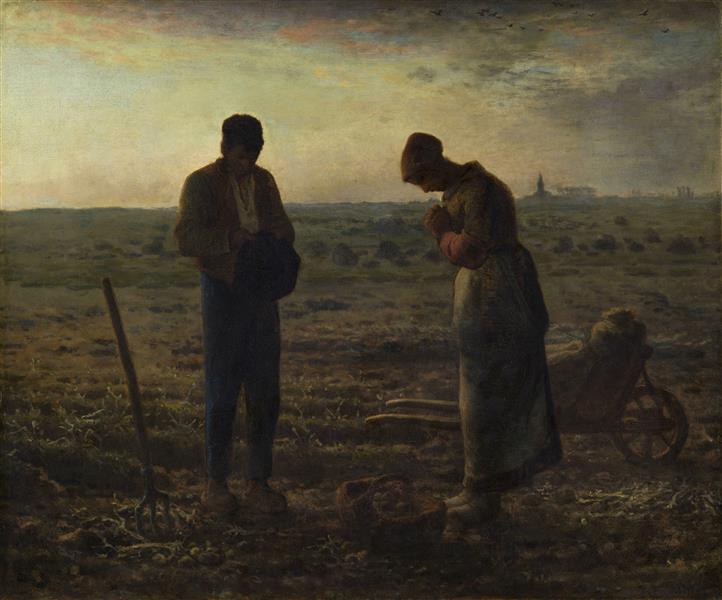
oil, canvas · 1859
Medium
oil, canvas
Period
Realism
Held at
Musée d'Orsay, Paris, France