Judith Beheading Holofernes
National Museum of Capodimonte, Naples, ItalyUffizi Gallery, Florence, Italy
Artemisia Gentileschi, 1620
An intense interplay of light and shadow, characteristic of the dramatic Tenebrism movement, defines the approach to Judith Beheading Holofernes, an oil on canvas created in 1620 by Artemisia Gentileschi. One anticipates forms emerging abruptly from deep darkness within this composition, which would focus viewer attention acutely on the brutal act and the figures involved. Gentileschi, an artist known for her compelling engagement with challenging subjects, rendered a scene of raw power here, likely amplified by the stark visual language of Tenebrism. The biblical narrative itself is inherently charged, and the very title implies a direct confrontation, a moment of decisive, violent action. This work, produced in the early 17th century, indicates Gentileschi's commitment to portraying powerful narratives through a medium designed to heighten emotional impact. Without specific visual documentation of this particular rendition, what precise visual details and emotional weight this specific 1620 interpretation carries remains an open question without direct observation of the piece itself.
No thoughts yet. Be the first to share one.
TagsTenebrismoilcanvasreligious painting
5.00 (2 ratings)
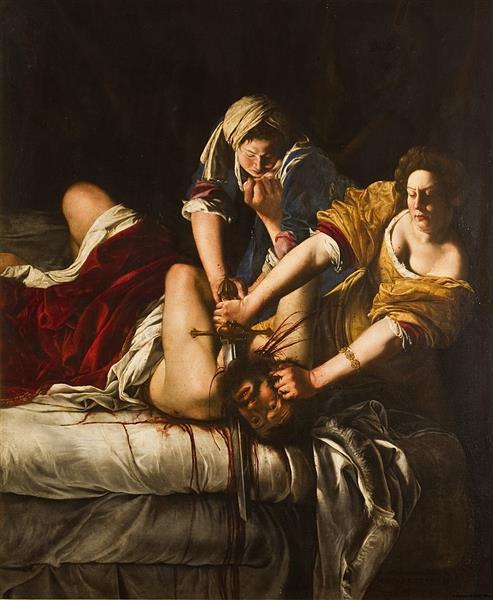
oil, canvas · 1620
Medium
oil, canvas
Period
Tenebrism
Held at
National Museum of Capodimonte, Naples, Italy