In the Tepidarium
Lady Lever Art Gallery, Port Sunlight, UK
Lawrence Alma-Tadema, 1881
Lawrence Alma-Tadema’s 1881 oil artwork, "In the Tepidarium," transports viewers to a warm Roman bath, capturing a moment of serene indulgence. The piece showcases a woman reclining on a sofa, delicately holding a large, strategically placed ostrich feather and a strigil—a tool historically used for scraping the skin after bathing rituals involving soap and oil. Alma-Tadema's masterful technique is evident in his ability to render precise architectural details alongside soft, luxurious textures, creating a vivid and romantic portrayal of reality. Originally acquired by the A and F Pears Soap Company, the artwork was intended for a soap advertisement. However, concerns that its depiction of an erotic nude might offend customers led to it never being used commercially. It was later sold to a private collector in 1916, preserving its place as a fascinating example of Romanticism and a glimpse into both ancient Roman leisure and Victorian sensibilities.
No thoughts yet. Be the first to share one.
TagsRomanticismoilnude painting (nu)
3.00 (1 rating)
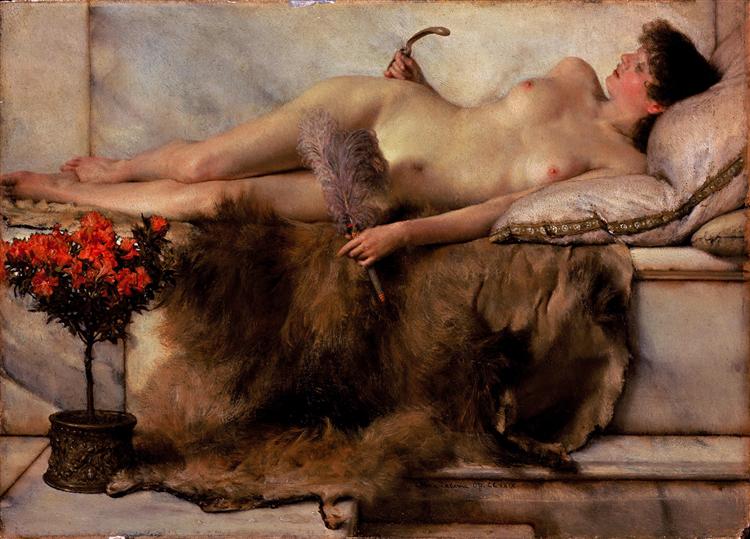
oil · 1881
Medium
oil
Period
Romanticism
Held at
Lady Lever Art Gallery, Port Sunlight, UK