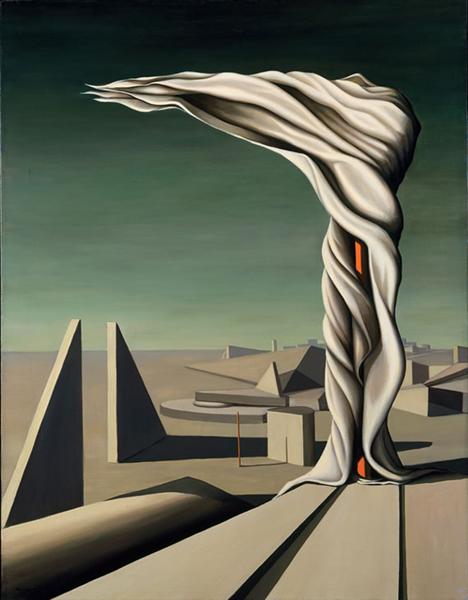
I Saw Three Cities
Kay Sage, 1944
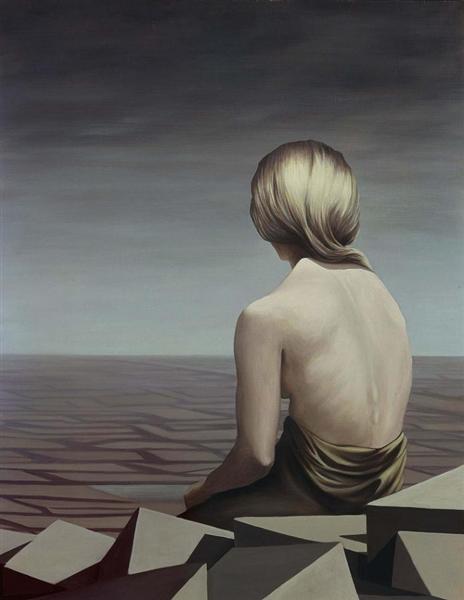
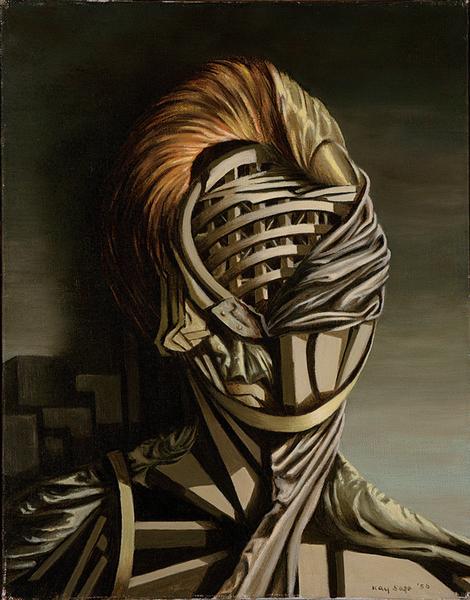
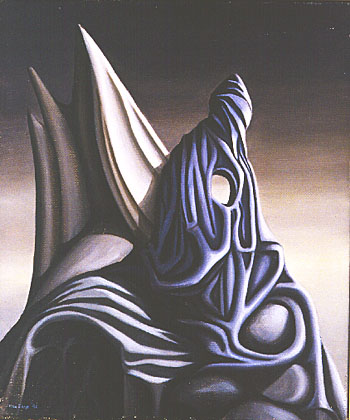
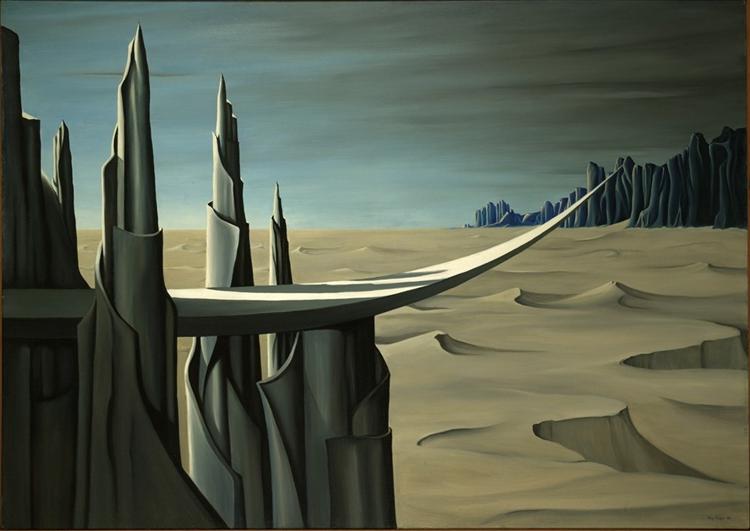
The enigmatic title, "I Saw Three Cities," immediately draws one into the conceptual realm of Kay Sage's 1944 work, placing it firmly within the Surrealist movement. Without any knowledge of its medium or visual details, the piece itself remains a phantom, inviting pure speculation about its form, texture, and palette. This profound absence of a material anchor paradoxically intensifies its potential for dream-like interpretation, a hallmark of Surrealism where the subconscious holds sway. What kind of cities did Sage envision? Were they crumbling ruins or impossible, gravity-defying structures, perhaps rendered in muted tones or stark contrasts? The year 1944 suggests a world grappling with profound upheaval, lending a somber or disquieting quality to these imagined urban landscapes. As an artist associated with Surrealism, Sage would have explored the irrational and the uncanny. The very lack of visual detail forces us to engage with the concept alone, making the experience intensely personal and perhaps even more unsettling than a fully revealed image. What remains is the profound question of what Sage truly saw, and how that vision, unburdened by material form, continues to resonate.
No thoughts yet. Be the first to share one.
TagsSurrealismlandscape
4.00 (1 rating)
1944
Period
Surrealism