El pífano
Musée d'Orsay, Paris, France
Édouard Manet, 1866
A name like "El pífano" immediately brings a figure into focus, even if the precise details remain elusive. This 1866 oil on canvas by Édouard Manet aligns with the Realism movement, a designation that historically promises a direct, unvarnished depiction of life. Manet’s choice of an everyday subject, likely a fifer, suggests a candid observation rather than grand historical narrative or idealized form. Crafted with oil paints on canvas, the artwork’s medium inherently implies the potential for rich color, substantial texture, and a tangible presence, characteristics central to conveying reality as perceived by the artist. However, without specific descriptive elements from the source material, the visual experience of this particular work remains largely in the realm of conjecture, compelling one to imagine its specific aesthetic. We are left to consider what Manet sought to capture in the expression or posture of his "fifer," and how the Realist approach of 1866 would uniquely inform such a portrayal. The absence of specific visual details makes contemplating the work's exact impact a fascinating, yet ultimately unfulfilled, exercise in art appreciation.
No thoughts yet. Be the first to share one.
TagsRealismoilcanvasportrait
4.50 (1 rating)
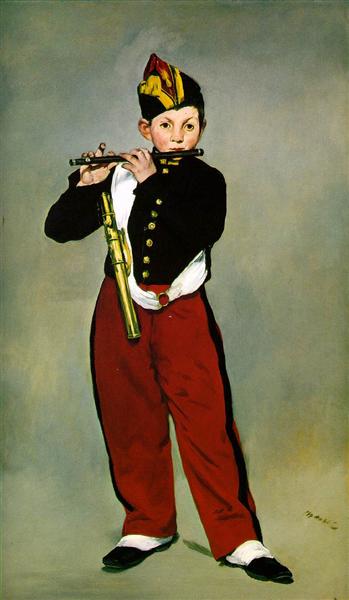
oil, canvas · 1866
Medium
oil, canvas
Period
Realism
Held at
Musée d'Orsay, Paris, France