Clouds
Museum of Modern Art (MoMA), New York City, NY, US
Gerhard Richter, 1982
This particular canvas by Gerhard Richter immediately plays with perception, suggesting a window to an expansive sky in its lower regions. Yet, the illusion quickly dissolves as your eye moves upward, confronting a dynamic expanse of bold tracks, deliberate scrapes, and thick smudges. Richter’s brushwork layers paint, actively cancelling the initial optical experience of looking through glass. The shift from a potentially representational "sky" to pure abstraction within a single work is striking. You can see the distinct application of oil on canvas—the texture of those layered smudges and the deliberate marks, perhaps creating a sense of movement or an impenetrable surface, rather than ethereal cloud forms. This alternating stylistic approach, from the hinted realism to the powerful abstract gestures, feels like a deliberate challenge to how we typically engage with art. It’s as if Richter is observing our very desire to find a clear narrative or "meaning" in the composition, only to reveal its futility. He seems to push us to abandon that quest, proposing instead a pure engagement with visual pleasure. The abstract forms, with their textured, layered paint, compel a different kind of observation. What if the satisfaction isn't in identifying the "clouds," but in the simple, raw discovery of beauty within these abstract forms for their own sake?
No thoughts yet. Be the first to share one.
TagsAbstract Expressionismoilcanvasabstract
3.00 (1 rating)
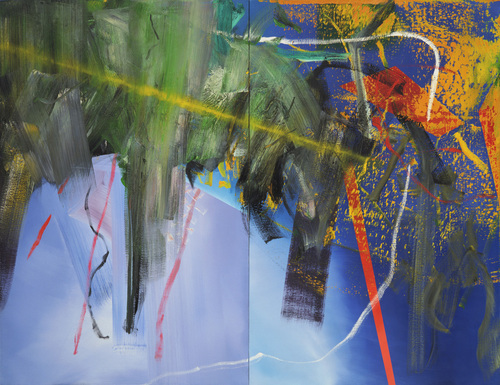
oil, canvas · 1982
Medium
oil, canvas
Period
Abstract Expressionism
Held at
Museum of Modern Art (MoMA), New York City, NY, US