Christ in the Wilderness
Tretyakov Gallery, Moscow, Russia
Ivan Kramskoy, 1872
The silent contemplation within Ivan Kramskoy's 1872 "Christ in the Wilderness" immediately draws one into its profound psychological space. Rendered in oil, canvas, and watercolor, this work from the Realism movement depicts a moment of ultimate trial. The biblical narrative details Jesus's forty days and nights of fasting in the desolate Judaean Desert, where he faced the devil's temptations. A Realist approach to this subject would suggest a grounding in observable reality, perhaps portraying the solitude and the arid environment with a stark, unidealized quality. The medium of oil, canvas, and watercolor could allow for a nuanced depiction of the desert's textures and light, subtly emphasizing the internal struggle rather than overt drama. There's a powerful tension in contemplating how Kramskoy might have used these materials to convey both the physical exhaustion from fasting and the mental fortitude of refusal. This work poses a lingering question about the quiet strength required to endure such an isolated, spiritual confrontation.
No thoughts yet. Be the first to share one.
TagsRealismoilcanvaswatercolorreligious painting
5.00 (1 rating)
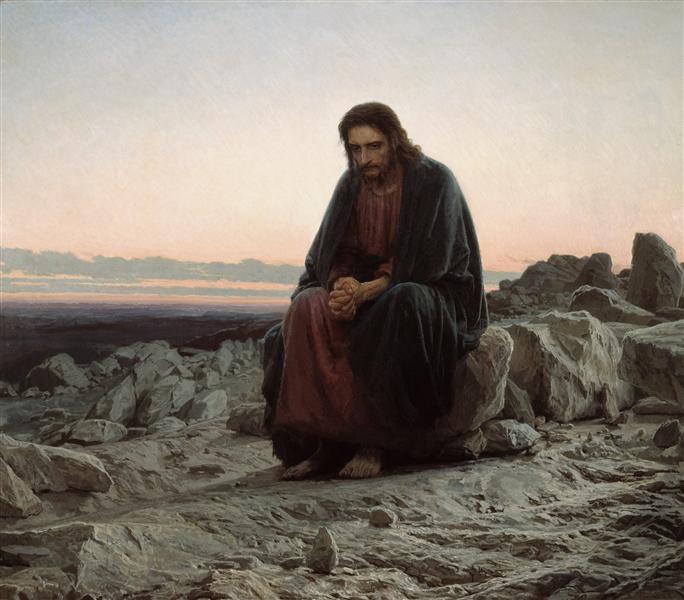
oil, canvas, watercolor · 1872
Medium
oil, canvas, watercolor
Period
Realism
Held at
Tretyakov Gallery, Moscow, Russia