An Exceptional Occurrence
Eileen Agar, 1950
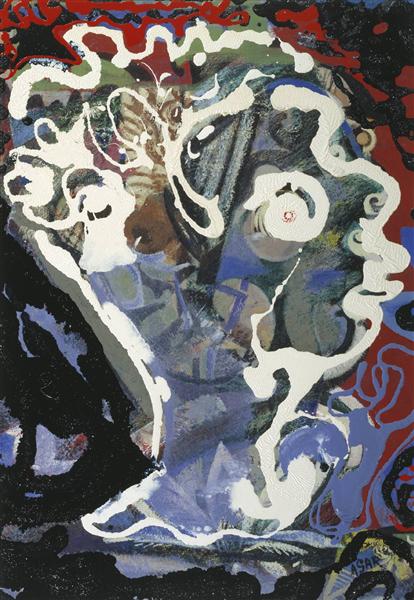
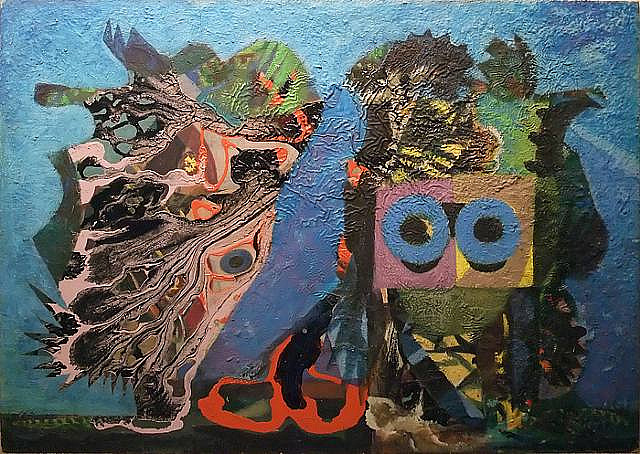
"An Exceptional Occurrence," a 1950 work by Eileen Agar, immediately draws us into the orbit of Surrealism, a movement that thrives on disrupting expectations and revealing the extraordinary within the commonplace. The very notion of an "exceptional occurrence" suggests a moment poised between the familiar and the utterly fantastic, a scene where the rules of the visible world might subtly or dramatically bend. In the absence of a known medium, the artwork takes on an even more elusive character, inviting contemplation not just of what *is* depicted, but what *could be*. Did Agar manifest this unexpected event through a vibrant painting, a delicate collage, or perhaps something entirely unconventional, blurring the lines of traditional art forms? This ambiguity amplifies the surrealist impact, making the *idea* of the artwork as potent as any potential visual. The title prompts us to consider how Agar might have captured such a singular, possibly dreamlike, moment, challenging our understanding of reality and leaving us to ponder the nature of the "exceptional" itself. It makes one wonder what specific visual narrative, if any, could truly embody such a provocative title within the Surrealist idiom.
No thoughts yet. Be the first to share one.
TagsSurrealismfigurative
4.00 (1 rating)
1950
Period
Surrealism